

TPO vs EPDM vs Modified Bitumen: Choosing the Right Flat Roof for Your Business in Cumming
Three roofing membrane materials dominate commercial flat roofing in Cumming and the broader North Atlanta metro: TPO, EPDM, and modified bitumen. Each material stands out in certain respects, and choosing the right one can mean a commercial roof with decades of reliable roofing quality.
Property managers and owners replacing a roof in 2026 are usually choosing among these three options, and the decision drives 25 to 50 years of operating costs.
Having a checklist for commercial roof inspection is excellent for routine maintenance. But if you’re just planning on material choice for a new installation, this guide compares all three on cost, lifespan, climate fit for Cumming, repair access, and the building profiles each one fits.
A Quick Comparison Between the Materials
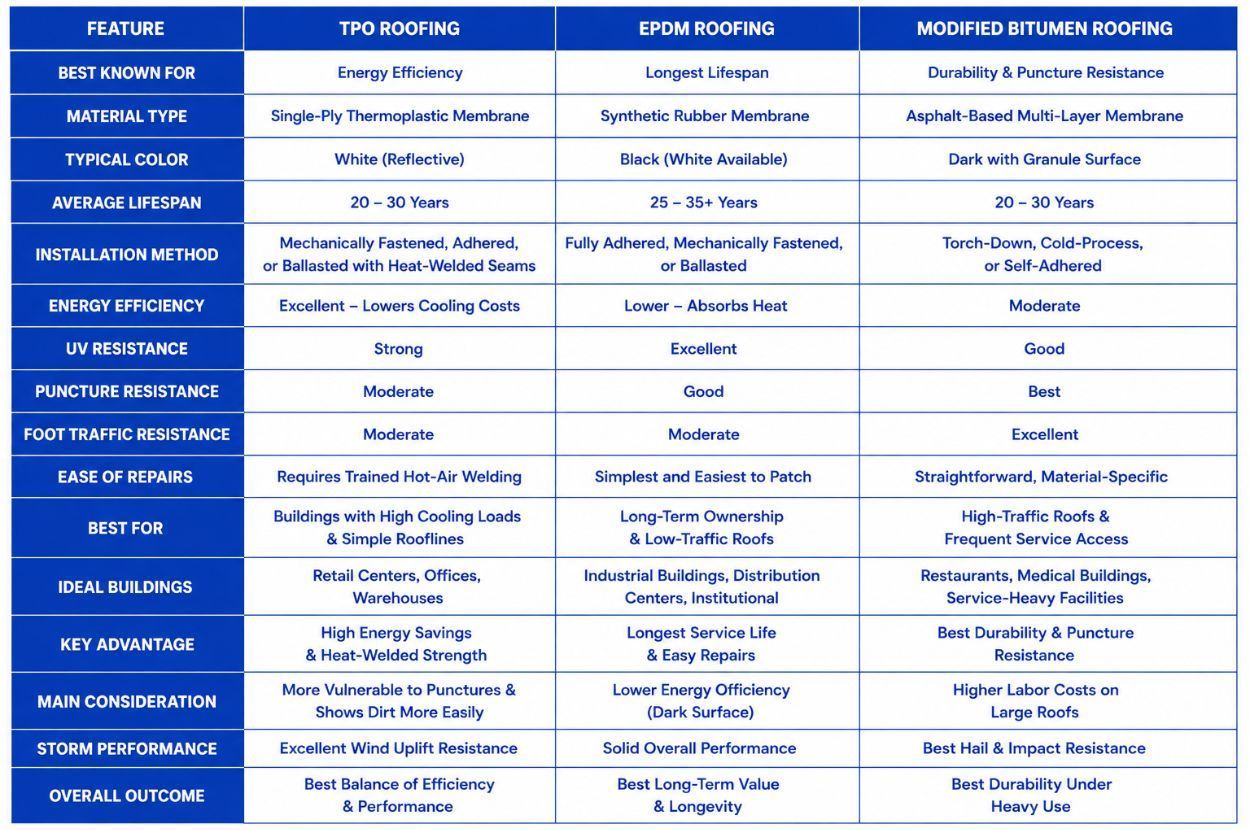
TPO is the energy-efficient option. The white reflective surface and heat-welded seams make it the best fit for cooling-cost-sensitive buildings with simple rooflines.
EPDM is the longevity option. The black rubber membrane has the longest field-proven life and the simplest repairs, which makes it the right call for low-traffic buildings prioritizing service life over energy savings.
Modified bitumen is great for durability. The asphalt-based, multi-layer system delivers the best puncture resistance, which makes it the right fit for high-traffic roofs and buildings with frequent rooftop service work.
TPO (Thermoplastic Polyolefin)
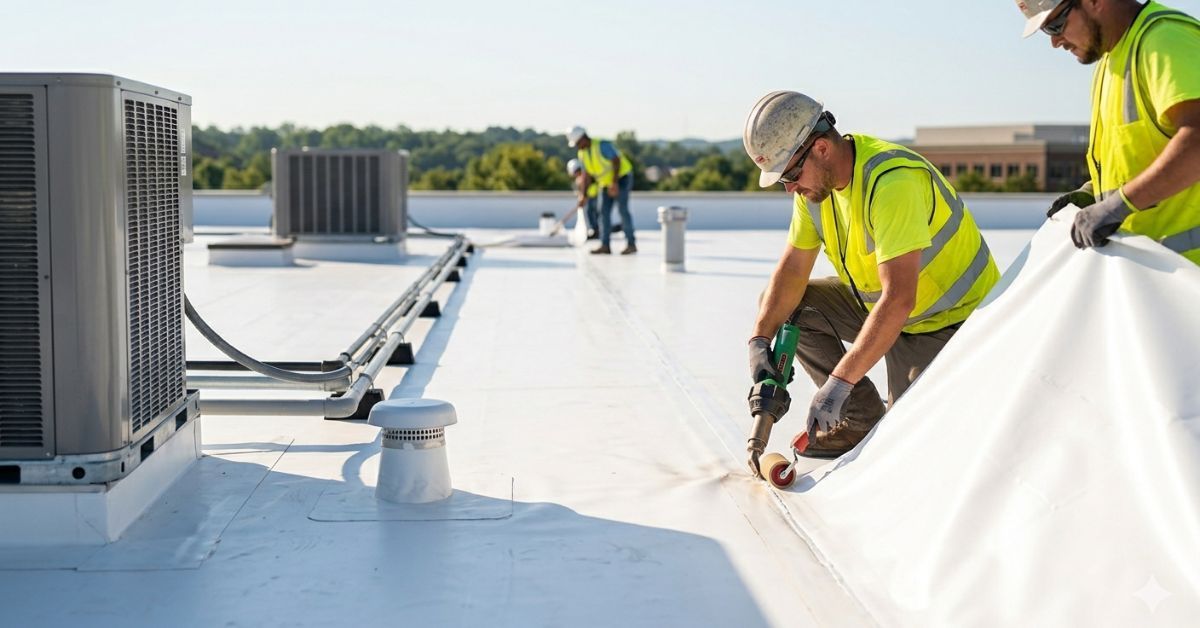
TPO is the dominant new-construction commercial membrane in Cumming, and across the U.S. It's a single-ply membrane, usually white, with heat-welded seams that create a continuous waterproof surface.
Modern formulations have been on the market since the late 1990s, and the product has matured into a reliable, energy-efficient option for Cumming commercial buildings.
How TPO Is Installed
TPO is mechanically fastened to the deck, fully adhered with bonding adhesive, or ballasted. Seams are heat-welded with a robotic welder for long runs and a hand welder for details — a properly welded TPO seam is stronger than the membrane itself.
TPO Lifespan in Cumming
20 to 30 years with proper installation and maintenance. Earlier-generation TPO had reformulation issues that caused premature failure on roofs installed in the early 2000s, but current ASTM-rated TPO from established manufacturers (GAF, Carlisle, Firestone, Versico) has resolved most of those problems.
Where TPO Works Best
Buildings with high cooling loads (Georgia summers), simple roof geometry, and owners who value the reflective white surface for HVAC savings. Retail centers, warehouses, mid-rise office buildings, and most new commercial construction in Forsyth County land here.
Where TPO Struggles
Roofs with heavy foot traffic from HVAC service calls carry puncture risk on TPO. Highly complex geometry with many penetrations pushes the welding labor up, and buildings where rooftop equipment leaves marks on the white surface add cleaning to the maintenance line item.
EPDM (Ethylene Propylene Diene Monomer)
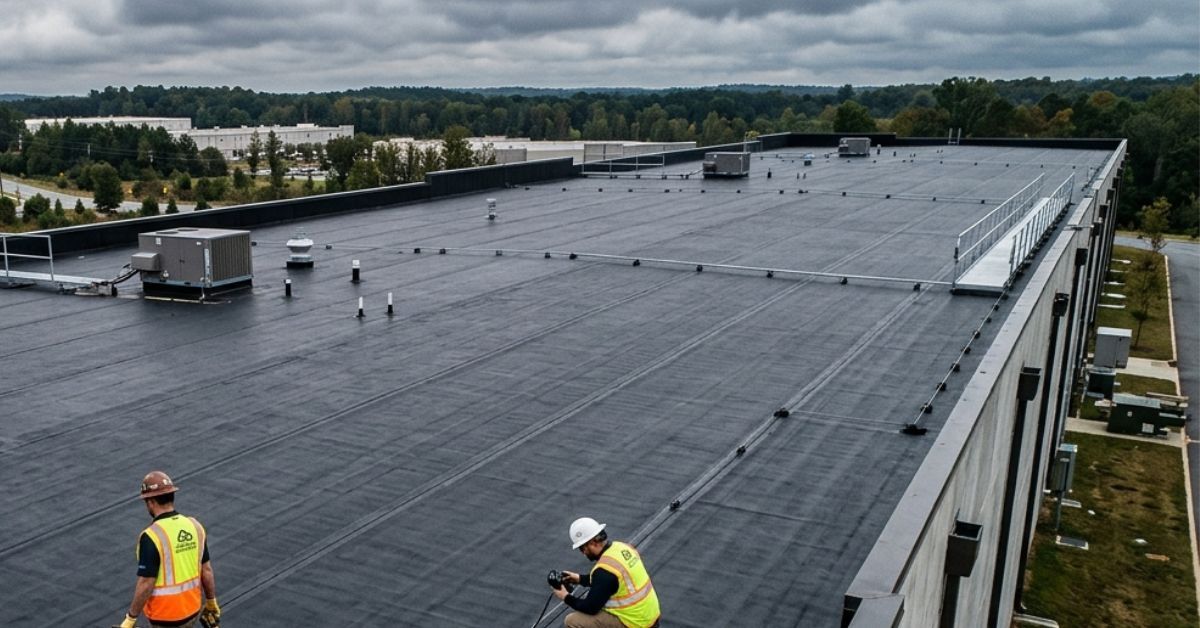
EPDM is a synthetic rubber. It's the longest-running modern commercial roofing system — installations from the 1970s and 1980s are still in service.
It's also the simplest membrane to repair, which matters more than it sounds when you're managing a roof at year 22.
How EPDM Is Installed
Fully adhered (glued to substrate) gives the longest life but costs the most. Mechanically fastened uses plates and screws into the deck, and ballasted lays the membrane loose with stone or pavers holding it down — ballast is uncommon in new construction but still found on older Cumming buildings.
EPDM Lifespan in Cumming
25 to 35 years of field-proven experience, with many EPDM roofs in service well past 40 years. The rubber stays flexible across temperature swings and resists UV degradation as well as any commercial membrane on the market.
Where EPDM Works Best
Buildings prioritizing the longest possible service life, low-traffic roofs, owners holding the property long-term, and structures where roof color doesn't matter. Industrial buildings, distribution centers, and long-hold institutional properties in Cumming fit this profile.
Where EPDM Struggles
Cooling-cost-sensitive buildings lose ground because the black surface absorbs heat (though white EPDM is available at a premium). Roofs with frequent rooftop equipment changes also see more recurring repairs on EPDM because seam disruptions become a regular line item.
Modified Bitumen (Mod-Bit)
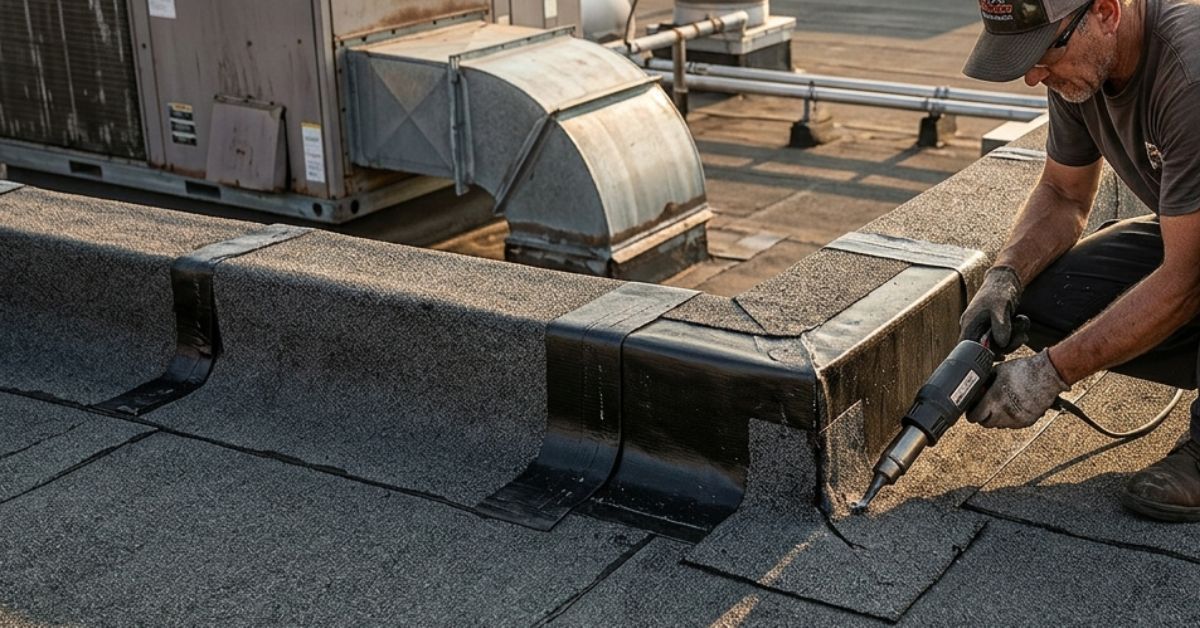
Modified bitumen is the modern descendant of built-up roofing. It uses asphalt modified with polymers to create a flexible, puncture-resistant membrane, installed in two or three layers for redundancy that single-ply systems don't have.
How Modified Bitumen Is Installed
Torch-down uses an open flame to melt the membrane to the substrate — fast, but raises fire-permit and insurance considerations. Cold-process uses an adhesive instead of flame, and self-adhering peel-and-stick mod-bit eliminates both flame and solvent — the right choice depends on the building's occupancy and contractor preference.
Modified Bitumen Lifespan in Cumming
Most modified bitumen roofing installations last anywhere between 20 and 30 years on multi-ply systems. Single-ply mod-bit can last around 15-20 years.
Where Modified Bitumen Works Best
High-foot-traffic roofs benefit from the granule-surfaced top layer, which is the most puncture-resistant of the three membranes. Restaurants, medical buildings, and small-format retail in Cumming all fit this category — frequent rooftop service work makes the multi-ply redundancy worth it.
Where Modified Bitumen Struggles
Large flat roofs push the labor of multi-ply installation up significantly. Cooling-cost-sensitive buildings also lose ground without a reflective top layer, and torch-down installs face strict fire regulations in some Cumming jurisdictions.
How Each Membrane Handles the Cumming Climate
All three membranes work in our climate, but they handle Cumming weather patterns differently.
Summer Heat and UV
TPO's reflective surface dumps the most solar heat. EPDM's black surface absorbs it, and mod-bit's granule top layer falls in the middle — for HVAC cost-sensitive buildings, TPO wins.
Humidity in Cumming
All three resist humidity well. EPDM is slightly more forgiving of trapped moisture below the membrane because rubber stays flexible, while TPO is sensitive to moisture trapped in older insulation.
Summer Thunderstorms in Forsyth County
Hail risk in Forsyth County is real but moderate. Mod-bit's multi-layer design handles hail strikes best, and TPO's welded seams resist wind uplift well — EPDM is fine on both but doesn't pull ahead.
Pollen and Oak Debris
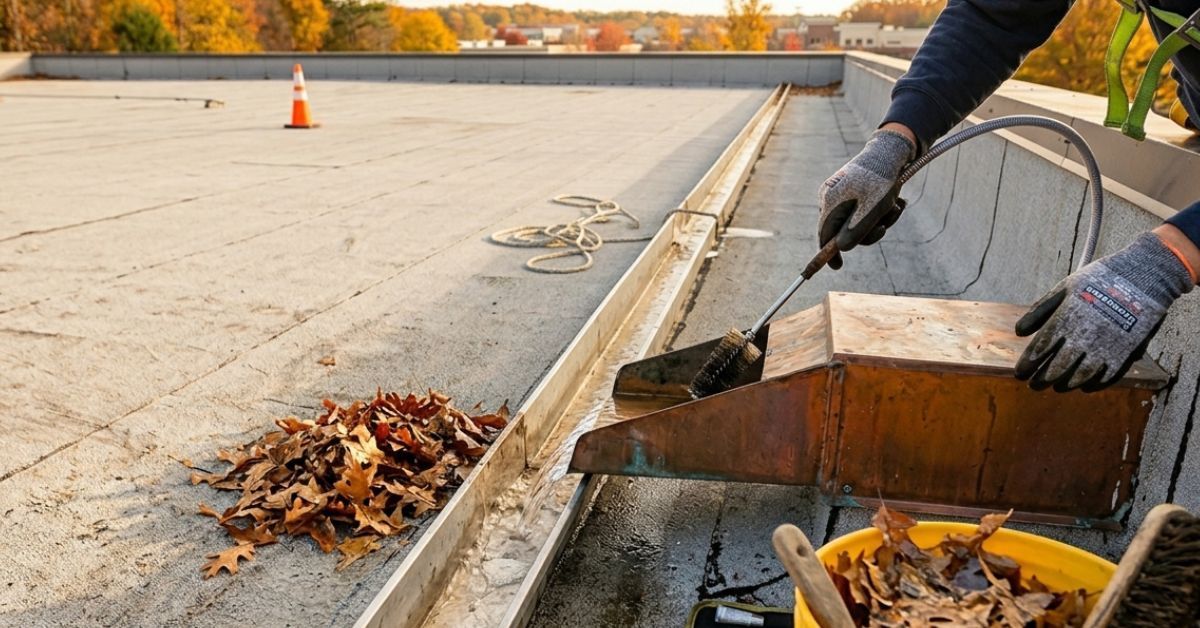
Roofs near mature oak canopy (older sections of Cumming) accumulate debris faster. The granule top of mod-bit hides minor surface wear better than smooth membranes, while TPO and EPDM show debris staining more visibly.
Commercial Roof Repair and Maintenance Access by Membrane
How easy a membrane is to repair matters more on year 15 than on year 1. The three systems sit at different points on that scale.
EPDM Repairs
EPDM is the simplest of the three. A patch of the same rubber and the right primer-and-tape system fixes most issues without specialized equipment, and roofing crews of any experience level can patch EPDM.
TPO Repairs
TPO requires a hot-air welder for proper seam repair. A handheld welder works for small patches, but the work has to be done by someone trained on the specific manufacturer's welding parameters — botched welds fail later.
Modified Bitumen Repairs
Modified bitumen patches with the same membrane and either torch, cold adhesive, or peel-and-stick depending on the original system. Repairs are straightforward but require matching material to the existing membrane.
Which Commercial Membrane Fits Which Cumming Business?
Retail Centers, Strip Centers, and Mid-Rise Offices
TPO is the default. Cooling cost savings on the white membrane usually outweigh other factors for these property types.
Warehouse, Distribution, and Large Industrial
TPO or EPDM. TPO wins if HVAC load is significant, and EPDM wins if longevity is the priority and the building stays in your portfolio long-term.
Restaurants, Medical, and Small High-Traffic Retail
Modified bitumen. Foot traffic from grease-trap service, HVAC calls, and frequent rooftop work justifies the multi-ply redundancy.
Historic, Institutional, and Long-Hold Properties
EPDM. Longest service life, simplest repair, and lowest operational complexity over decades make it the right call for long-hold owners.
Owner-Occupied Buildings With HVAC Focus
TPO. The cooling savings compound, and the owner sees them directly on the operating statement.
Schedule a TPO, EPDM, or Modified Bitumen Roof Assessment in Cumming
The right membrane for your Cumming business depends on the building, the budget, and the priorities — cooling cost versus longevity versus traffic tolerance. Roofs 4 Less assesses commercial properties across Forsyth County and the broader North Atlanta metro and provides itemized comparison quotes across all three membrane systems on the same building.
That way you can see real numbers for your specific roof instead of comparing ranges.
Call (678) 922-9227 or schedule a commercial roof assessment on our site. We'll walk the roof, pull cores if needed, and deliver a written assessment with three-membrane comparison pricing within five business days.