

Commercial Roof Maintenance Guide in Cumming | Roofs 4 Less
A new commercial roof in Cumming is a major capital expense, and it's often the investment that every property owner wants to push out as far as possible. Regular maintenance is what makes that happen, and
it costs a fraction of what an early replacement does.
Reactive maintenance is what catches Cumming property owners off guard. Small issues left alone in one season turn into much bigger ones the next, especially with the climate patterns we see in Forsyth County.
This guide breaks commercial roof maintenance in Cumming into the four seasonal windows that actually matter. Use it to build your calendar — what your facilities team handles in-house, what a contractor handles on contract, and what gets a same-day call when something shows up.
Why Seasonal Commercial Roof Maintenance Matters in Cumming
Cumming weather puts distinct stresses on commercial roofs throughout the year, and each season calls for different maintenance work. Spring brings pollen loads and post-winter assessment work, while summer brings UV stress, HVAC service traffic, and severe storm activity.
Fall brings leaf and oak debris that shuts down drainage if you don't stay ahead of it. Winter brings freeze-thaw cycles and the occasional ice event that adds load and stresses every weak point on the roof.
A maintenance program that responds to each season catches seasonal failures before they compound. A reactive program waits until tenants call about ceiling stains.
Spring Commercial Roof Maintenance in Cumming
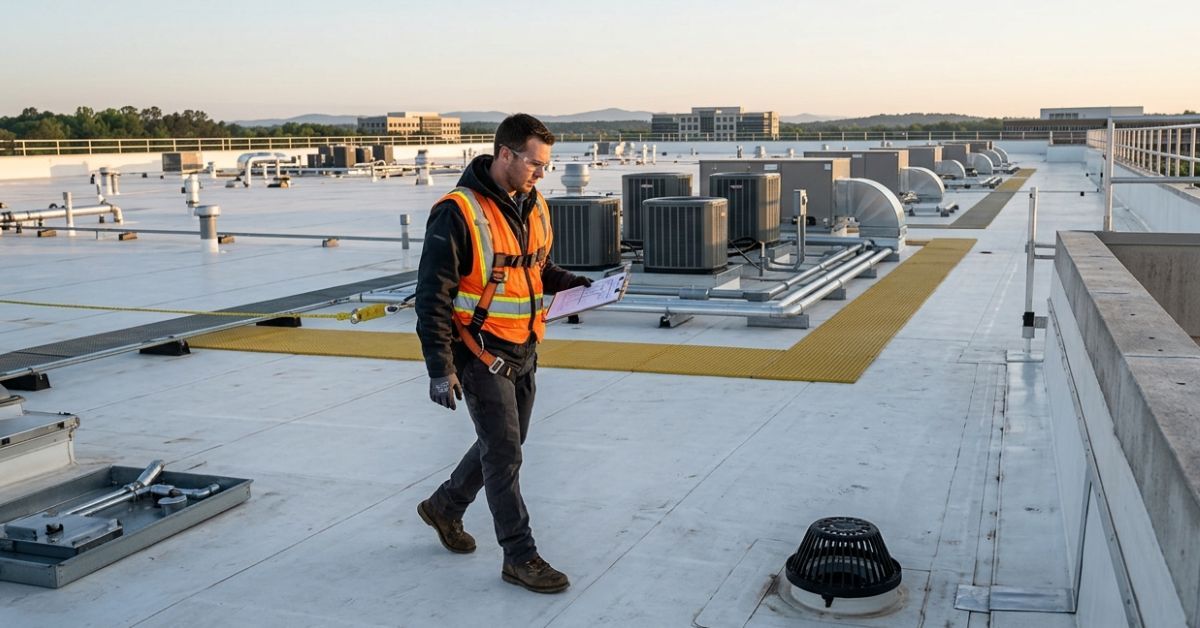
Spring is the most important time of year in Cumming for commercial roof maintenance. This is when winter freeze-thaw has revealed any weak points, pollen loads are about to hit, and storm season is still six weeks away.
The first step of commercial roof maintenance is a full walk-through. We inspect the entire roof in a grid pattern and look for cracked sealant, lifted flashing, or splits at seams — anything winter freeze-thaw cycles may have opened up.
Drainage comes next. We clear every drain, scupper, and gutter of winter debris, then test flow with a hose at each drain to confirm everything moves water the way it should.
Pollen wash is unique to spring commercial roof maintenance in Cumming. Heavy pollen on TPO or EPDM holds moisture against the membrane and stains the surface, so a low-pressure rinse from a power washer clears it before storm season arrives.
Seams and flashings need a dedicated walk of their own. Re-seal anything questionable now, before storm season exploits weak points at terminations and around penetrations.
HVAC service crews use spring to swap or maintain rooftop units, which puts a lot of traffic on the membrane. Check every curb flashing immediately after their work — many commercial roof leaks in Cumming start with HVAC service that didn't reseal properly.
Document everything before you wrap up. A spring baseline of photos and notes gives you something to compare against in fall, and against the previous year's record.
Cumming Commercial Roof Maintenance in Summer
Summer commercial roof maintenance in Cumming is mostly reactive, and storm-response work is common during this season. After any storm and wind gusts above 50 mph or hail of any size, scan the roof within 48 hours and check the interior for water signs.
UV monitoring is just as crucial, especially with Cumming’s hot and muggy summer seasons. Note chalking on TPO, fading granule color on mod-bit, or surface drying on EPDM. None of these will require urgent remediation, but each finding signals where to focus on next year's preventive work.
Daily temperature swings of 30°F or more between night and afternoon put stress on every membrane seam. Watch for visible movement at terminations, especially around skylights and mechanical penetrations.
Summer is also a heavy HVAC service season. If multiple contractors are working on rooftop units, designate walk paths with rubber mats or membrane-rated walk pads to minimize the risk of random punctures.
Save major repair work for shoulder seasons when you can. Membrane adhesives and torch-down asphalt cure poorly in Georgia summer heat, so schedule planned commercial roof repairs in Cumming for early summer or fall whenever possible.
Fall Commercial Roof Maintenance in Cumming
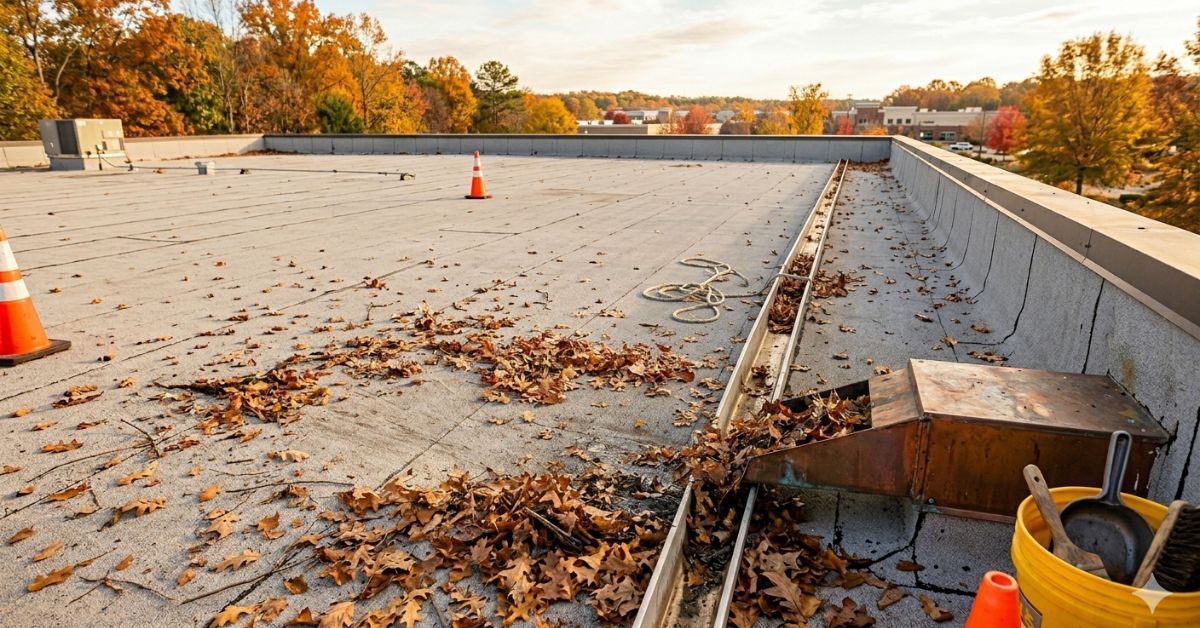
Fall commercial roof maintenance in Cumming has one focus above all others: get the roof clean and drainage clear before leaves and acorns shut everything down. Schedule debris removal twice: once in mid-October after oak leaf drop starts, and once in late November after the bulk of leaf drop ends.
Drainage clearing is the highest-stakes work of the year. Every drain, scupper, and gutter checked and cleared, with leaf guards installed or replaced on internal drains — fall drainage failure is the single most common cause of water damage on Cumming commercial buildings.
A full commercial roof inspection and maintenance should land in October or early November. Get any flashing, sealant, or seam work done before the first freeze, when membrane adhesives stop performing.
HVAC crews come back to the roof when heating systems cycle on. Re-check curb flashing after every visit — the pattern of leaks following HVAC service repeats itself every fall.
Close out with end-of-year documentation. Insurance carriers often request photo records as part of annual policy reviews, and current documentation on file saves time when supporting any future claim.
Commercial Roof Maintenance in Cumming for Winter
Cumming winters are mild but never gentle on commercial roofs. After any night below 25°F, plan to inspect the roof within a week — water that penetrated before the freeze expands and opens up new leaks.
Winter storms in Forsyth County tend to be ice and freezing rain rather than snow. Both add load to the roof and stress drainage when they melt, so a post-storm walk after each event is non-negotiable.
Snow load monitoring matters when we get the rare, heavier event. Most Cumming roofs are designed for a 20 psf snow load — after four inches or more of accumulation, monitor for structural deflection and clear high-priority drains.
Most major work should wait until winter is over. Membrane adhesives and seam welds perform poorly below 45°F, so schedule any non-emergency commercial roof maintenance in Cumming for early March
when consistent above-50°F days return.
Year-Round Commercial Roof Maintenance For Cumming Buildings
A few maintenance items don't follow a seasonal pattern. Keep them on the radar through the year.
No matter the season, documentation is a crucial scope for every roof maintenance. Maintain a single record with inspection notes, repair records, vendor invoices, warranty claims, and photo logs — the next property manager will need it, and so will your insurance carrier.
Managing your roof’s walkway extends membrane life on rooftops with frequent service and foot traffic.
Installing designated walk paths pays back the first time a contractor's boot prints don't end up on the
membrane itself.
Another proven preventive system is coordinating with vendors and commercial roofing contractors. Any
contractor working on the roof should report to facilities before going up and complete a brief sign-off after coming down, because third-party crew punctures are one of the most preventable causes of commercial roof leaks in Cumming.
Keep your warranty file current and accessible. Many maintenance issues are warranty-covered if the right contractor handles them — but only if you can produce the paperwork.
What To Outsource vs. Handle In-House
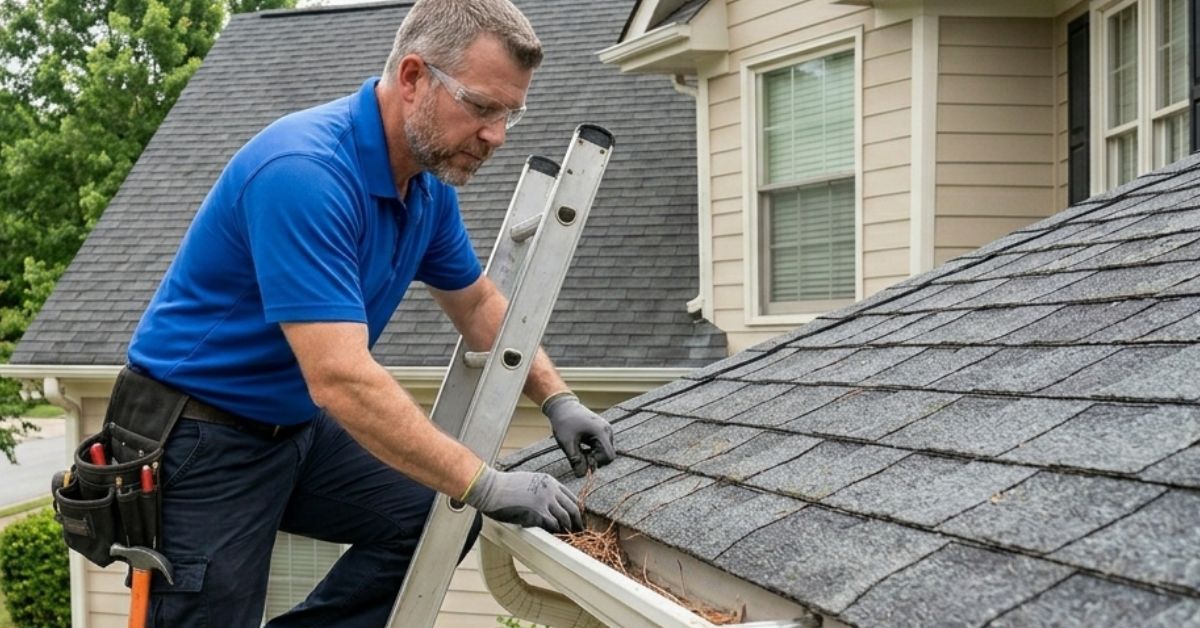
Commercial properties in Cumming may get the best results from a split maintenance model, while many can benefit from working with a commercial roofing contractor. In-house staff may handle routine walks and obvious clearings, but a roofing contractor can take care of all that, along with structural work and the annual inspection.
In-house facilities staff can own routine debris clearing, visual surface walks, drain and scupper unclogging, documentation, and coordination with rooftop service vendors.
A roofing contractor should own the work that touches the membrane, flashing, or warranty terms. That includes annual professional inspection, post-storm damage assessment, any membrane repair or seam work, pre-winter and post-winter contractor walks, and full maintenance contract work.
Schedule commercial roof maintenance with Roofs 4 Less in Cumming
The most reliable way to keep a commercial roof in Cumming on its full service-life schedule is a maintenance contract with a roofing contractor who knows the building. Roofs 4 Less offers commercial roof maintenance contracts across Forsyth County and the broader Cumming area, with scopes that include scheduled inspections, priority storm response, debris clearing, and a minor repair allowance — plus a custom scope for portfolios or buildings with specific risk profiles.
Call (678) 922-9227 or request a maintenance quote on our site. We'll walk the roof, build a scope that fits the building, and price it against your current maintenance spend so you can see whether a contract makes sense.
Frequently Asked Questions
How often should commercial flat roofs in Cumming be cleaned?
Debris clearing should happen at least twice a year — spring and late fall. Buildings near mature oak canopy, restaurants with grease-stack proximity, or roofs with frequent HVAC traffic benefit from quarterly cleanings.
What does a commercial roof maintenance contract usually include?
Most commercial roof maintenance contracts in Cumming include two scheduled inspections per year, debris and drain clearing, a minor repair allowance, and priority storm response. Scope depends on building size, roof type, and rooftop equipment — most contracts are quoted per square foot of roof plus any scope add-ons like 24/7 emergency callout.
Is a commercial roof maintenance contract worth it for a Cumming property?
For most buildings, yes. Maintenance contracts catch issues early enough to keep them small, which usually saves more in deferred replacement work than the contract costs. Smaller single-tenant properties with simple rooflines and no rooftop equipment can often get by on a one-off annual inspection instead.
Does commercial roof maintenance keep my warranty valid?
Most manufacturer warranties require documented routine maintenance. Failing to maintain the roof — and
being unable to prove it — can void warranty coverage when you need to claim, so keep maintenance records (in-house and contractor) in the warranty file.
What's the most common commercial roof problem in Cumming?
Drainage failure. Clogged scuppers, leaf-blocked drains, and ponding water cause more commercial roof damage in Cumming than any other single issue, which is why fall debris removal and spring drain clearing are the highest-leverage preventive work on the calendar.